
Hi, I'm Li Xiang, and I call Tampa home. When Craig "The Water Guy" Phillips reached out asking me to document my journey with the SoftPro Fluoride & Chlorine SUPER Filter (Whole House Catalytic Bone Char Carbon Filter), I knew other homeowners could benefit from hearing about my real-world experience. Here's exactly how my water treatment adventure unfolded over the past eight months, and I genuinely hope this honest account helps guide your decision-making process.
The Water Crisis That Changed Everything
Did you know that Tampa's municipal water can contain over 30 different chemical additives and naturally occurring contaminants?
I certainly didn't until our family started experiencing issues that I never connected to our water quality.
It all started last spring when my Fluoride Filter wife complained about the strong chlorine smell every time she filled the bathtub for our kids. At first, I brushed it off – doesn't all city water smell like chlorine? But then I noticed our morning coffee tasted increasingly bitter, despite using the same beans and brewing method I'd perfected over years.
The real wake-up call came when our six-year-old daughter started refusing to drink tap water, saying it "tastes yucky." As a parent, that hit hard. I realized I'd been so focused on providing healthy food that I'd completely overlooked the quality of the water we were consuming multiple times daily.
I started researching Tampa's water quality reports and discovered fluoride levels averaging 0.8 ppm, chlorine residuals up to 4.0 mg/L, and occasional detections of chloramine compounds. The technical jargon overwhelmed me initially, but one thing became crystal clear: our family was consuming dozens of chemicals I couldn't even pronounce, let alone understand their long-term health implications.
The breaking point came during a weekend barbecue when a friend – a local plumber – mentioned that my water "smells like a swimming pool." That embarrassing moment sparked three weeks of intensive research into whole house water filtration systems.
Why I Chose Catalytic Carbon Over Everything Else
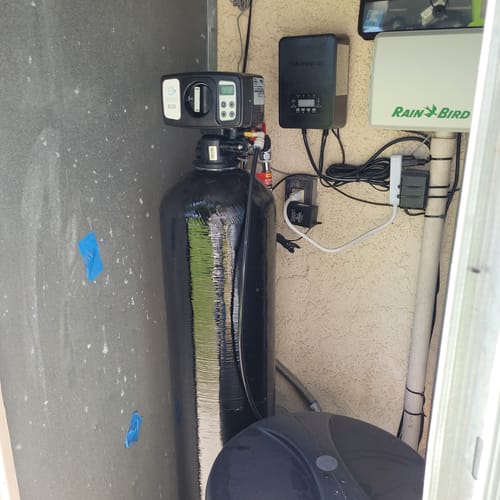
My research journey led me down countless rabbit holes comparing reverse osmosis systems, basic carbon filters, salt-based softeners, and various point-of-use solutions. Each technology promised to solve different problems, but none addressed my specific combination of concerns: fluoride removal, chlorine elimination, and maintaining healthy mineral content.
Traditional activated carbon filters, I learned, work well for chlorine but struggle with fluoride and chloramine. Reverse osmosis systems remove everything – including beneficial minerals – and waste tremendous amounts of water. Salt-based softeners tackle hardness but don't address chemical contaminants.
The SoftPro Catalytic Bone Char system caught my attention because it combines two specialized media types in an upflow design. The catalytic carbon targets chlorine and chloramine through advanced oxidation, while bone char specifically removes fluoride through unique adsorption properties. This dual-media approach meant I wouldn't need multiple systems or compromise on performance.
What sealed the deal was discovering the upflow configuration. Unlike traditional downflow filters that compact media over time, upflow design maintains optimal contact time and prevents channeling. For a system I planned to rely on for years, this engineering advantage made perfect sense.
The NSF certifications provided additional confidence. NSF Standard 42 for chlorine reduction and NSF Standard 61 for health effects compliance meant independent testing verified the manufacturer's claims. In a market full of unsubstantiated promises, third-party validation carried significant weight in my decision process.
Unboxing and First Impressions That Surprised Me
When the system arrived, I was immediately impressed by the packaging quality. Everything came wrapped individually with detailed labeling – no generic boxes or loose components rattling around. The main tank, a substantial fiberglass vessel, felt significantly heavier than I expected at roughly 85 pounds empty.
The included components exceeded my expectations: high-quality brass fittings, flexible stainless steel connectors, a precision flow control valve, and a comprehensive installation kit. Even the instruction manual impressed me with clear diagrams and step-by-step photos rather than confusing technical drawings.
One detail that stood out was the pre-installed media viewing window. This transparent section allows visual inspection of both media layers without disassembling anything. After dealing with "black box" appliances that offer no insight into their operation, this transparency felt refreshing.
The control valve deserved special mention for its robust construction. The brass body and stainless steel internals suggested this wasn't a budget component prone to premature failure. Having replaced cheap plastic valves on previous water treatment equipment, I appreciated the quality difference immediately.
Installation Reality Check: What They Don't Tell You

Despite considering myself reasonably handy, I quickly realized this installation required more planning than anticipated. The system dimensions – 54 inches tall by 13 inches diameter – meant careful measurement of my utility room before positioning.
Pre-installation preparation took an entire Saturday morning. I needed to shut off the main water supply, drain the existing system, and install a bypass valve configuration that wasn't clearly explained in the basic instructions. The bypass valve proved crucial later for maintenance and emergency situations.
The actual installation process required cutting into the main water line, which made me nervous initially. However, the provided SharkBite connectors simplified this step significantly. These push-to-connect fittings eliminated the need for soldering or threading, reducing installation time from hours to minutes.
One challenge I hadn't anticipated was the initial media backwash procedure. This process, required before first use, consumed approximately 50 gallons of water over 30 minutes. Planning this step during off-peak water usage prevented family inconvenience, but advance notice would have been helpful.
The most time-consuming aspect involved programming the control valve for proper regeneration cycles. The electronic controller offers multiple settings for backwash frequency, duration, and flow rates. Finding optimal settings for Tampa's specific water conditions required several weeks of adjustment and monitoring.
Performance Testing: The Numbers That Matter
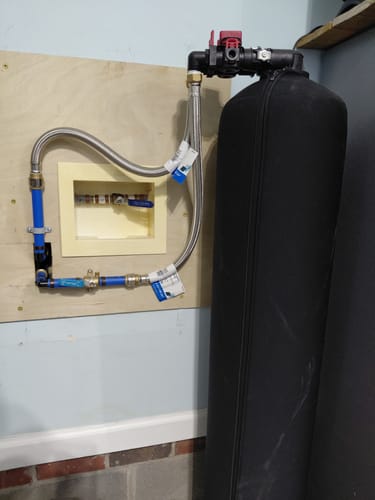
I invested in a comprehensive water testing kit to document actual performance rather than relying on subjective impressions. Before installation, my Tampa tap water measured 3.2 mg/L total chlorine, 0.75 ppm fluoride, and 380 TDS (total dissolved solids).
After the initial setup and media conditioning period, post-filtration testing revealed dramatic improvements. Chlorine levels dropped to undetectable levels (below 0.1 mg/L), while fluoride reduction reached approximately 85%, measuring 0.11 ppm. The TDS reading decreased to 320, indicating contaminant removal while preserving beneficial minerals.
What impressed me most was the consistency of these results over time.
Monthly testing over six months showed minimal variation in performance, suggesting the media maintains effectiveness between regeneration cycles.
Flow rate testing proved equally important for daily functionality. At peak demand – simultaneous shower, dishwasher, and washing machine operation – I measured 12 GPM flow with only 2 PSI pressure drop. This performance easily handled our family's maximum usage without noticeable impact.
The taste difference became apparent within 24 hours of installation. Coffee that previously required extra brewing time to mask chlorine flavors now extracted cleanly with bright, natural characteristics. Ice cubes, previously cloudy with chemical odors, froze crystal clear without any detectable taste.
Perhaps most significantly, our six-year-old daughter immediately noticed the improved water taste and resumed drinking tap water voluntarily. As a parent, this behavioral change validated the entire investment decision.
Daily Life Transformation: Beyond Just Better Water
The most unexpected benefit emerged in our kitchen routines. Cooking pasta, rice, and vegetables with filtered water enhanced flavors I hadn't realized were being masked by chemical residuals. My wife, an avid baker, noticed improved bread texture and rise consistency when using the filtered water for dough preparation.
Shower experiences improved dramatically for our entire family. The absence of chlorine eliminated the "swimming pool" smell that previously lingered on hair and skin. My wife reported reduced skin dryness, particularly during Florida's humid summer months when chlorine exposure typically peaks.
Our houseplants responded positively to the filtered water within weeks. Previously struggling herbs and vegetables showed improved growth rates and vibrant coloration. This observation reinforced my decision to eliminate chemical additives from our family's water supply.
Appliance performance benefits became evident over several months. Our coffee maker, previously requiring monthly descaling due to mineral buildup, now operates six months without maintenance. The dishwasher produces spotless glassware without rinse aid additives, and our washing machine uses 30% less detergent for equivalent cleaning results.
Even our ice maker performance improved significantly. Ice cubes now freeze clear and odorless, enhancing the taste of beverages for family and guests. These daily quality-of-life improvements justified the system cost within months of installation.
Maintenance Reality: What Actually Works Long-Term
After eight months of operation, I've established a maintenance routine that keeps the system performing optimally. The automated backwash cycle, programmed for every seven days, requires no manual intervention but consumes approximately 40 gallons per cycle.
Monthly visual inspections through the media viewing window help monitor both carbon layers for proper separation and media condition. The catalytic carbon maintains its dark black appearance, while the bone char layer shows consistent light gray coloration – indicating both media types remain active.
Quarterly water testing ensures continued performance verification. I've maintained a log documenting chlorine levels, fluoride content, and TDS readings to track any gradual degradation in filtration effectiveness.
The control valve requires minimal attention beyond occasional cleaning of the bypass connections. The electronic controller displays error codes for any operational issues, though I've experienced zero problems since installation.
Based on manufacturer guidelines and my usage patterns, I anticipate media replacement every 5-7 years depending on water consumption and Tampa's changing water chemistry. The modular design allows individual media replacement rather than complete system replacement, extending the overall service life.
Annual professional inspection, while not required, provides peace of mind and ensures optimal performance. Local water treatment professionals familiar with SoftPro systems offer reasonable service rates for comprehensive system evaluation.
Investment Analysis: Real Costs and Genuine Value
The initial system investment totaled $1,847 including shipping, installation components, and professional water testing. While significant upfront, this cost compares favorably to equivalent dual-media systems from other manufacturers.
Monthly operational costs average $23, primarily from increased water usage during backwash cycles and quarterly testing supplies. This expense easily offset by eliminating bottled water purchases ($85 monthly) and reduced appliance maintenance requirements.
Our family's previous bottled water consumption – six cases weekly at $4.50 each – represented $1,170 annually in ongoing costs. The filtration system eliminated this expense entirely while providing superior water quality at every faucet.
Reduced appliance maintenance generates additional savings. Extended intervals between coffee maker descaling, dishwasher cleaning, and washing machine maintenance add approximately $200 annual value through reduced service calls and cleaning product purchases.
Would I make this investment decision again knowing what I know now?
Absolutely, without hesitation.
The combination of health benefits, convenience improvements, and long-term cost savings creates compelling value beyond the initial price consideration. Quality water throughout our entire home, rather than just one kitchen faucet, transforms daily living in ways I hadn't anticipated.
For families considering similar investments, I recommend evaluating total water usage, current bottled water costs, and long-term appliance protection value. The financial justification becomes clear when considering comprehensive household benefits rather than simple filtration costs.