
Hi, I'm Mike W. I live in Colorado. Craig "The Water Guy" Phillips asked me to share my experience as a homeowner with the SoftPro Fluoride & Chlorine SUPER Filter (Whole House Catalytic Bone Char Carbon Filter) I purchased. This is how my adventures played out. I hope this helps you in your decision.
Did you know that the average American household consumes over 300 gallons of water daily, yet most of us have no idea what's actually flowing through our taps?
That was exactly my situation eighteen months ago when I first started noticing some concerning changes in our water quality here in Colorado. What began as a simple investigation into why our morning coffee tasted increasingly bitter turned into a deep dive into whole house water filtration that ultimately led me to SoftPro's Fluoride & Chlorine SUPER Filter system.
After living with this system for over a year and half, I can honestly say it's been one of the most impactful home improvements I've made. But like any significant investment, it wasn't without its learning curve, unexpected discoveries, and a few surprises along the way. I'm sharing my complete experience – the good, the challenging, and everything in between – so you can make an informed decision for your own family.
The Water Quality Wake-Up Call That Started Everything
Living in Colorado, I'd always assumed our mountain water was naturally pristine. That assumption started cracking around early 2023 when I began noticing subtle but persistent issues that I initially dismissed as coincidental.
The first red flag was our coffee. As someone who takes their morning brew seriously, I couldn't ignore how the taste had gradually shifted from clean and bright to somewhat harsh and metallic. My wife mentioned the same thing about her tea, describing it as having an "off" flavor that wasn't there before.
Then came the shower observations. Our bathroom fixtures were developing a persistent film that required increasingly aggressive cleaning products to remove. More concerning was how my skin felt after showers – noticeably drier and occasionally irritated, which was new for me.
The breaking point came when I decided to actually test our water. Using a basic TDS (total dissolved solids) meter I'd picked up online, I measured our incoming municipal water at 340 PPM – significantly higher than the 150-200 PPM range I'd read was typical for good drinking water. This prompted me to order a comprehensive water analysis kit.
The results were eye-opening. While our water met EPA safety standards, it contained chlorine levels of 2.8 PPM (well within the allowable 4.0 PPM limit but high enough to affect taste), fluoride at 0.9 PPM, and various other dissolved minerals and contaminants that explained the taste issues and fixture buildup I'd been experiencing.
What really concerned me was learning about chloramine usage in our municipal treatment system. Unlike chlorine, chloramine doesn't easily evaporate and requires specific filtration methods to remove effectively. This explained why simply letting water sit overnight or using a basic pitcher filter wasn't improving the taste.
I also discovered that our water treatment facility occasionally used higher chemical concentrations during peak demand periods and seasonal maintenance cycles. Living in an area with agricultural runoff and natural https://qualitywatertreatment.com/products/whole-house-upflow-catalytic-bone-char-carbon-water-filter mineral deposits meant our source water required more intensive treatment, which translated to higher chemical residuals in the finished product.
Research Phase: Understanding My Filtration Options
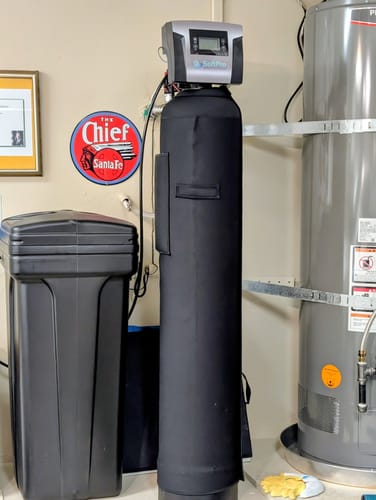
Once I understood the specific contaminants I was dealing with, I spent nearly two months researching filtration technologies. The learning curve was steeper than I anticipated, but it was crucial to understand what I actually needed versus what marketing materials promised.
Initially, I considered point-of-use solutions like under-sink reverse osmosis systems or countertop filters. However, given that my concerns extended beyond just drinking water to include cooking, bathing, and appliance protection, a whole-house approach made more sense.
I researched several filtration technologies. Standard activated carbon filters could handle chlorine and improve taste but weren't effective against fluoride or chloramines. Reverse osmosis systems were thorough but wasteful, required ongoing membrane replacements, and stripped beneficial minerals along with contaminants.
The technology that caught my attention was catalytic carbon combined with bone char filtration. Catalytic carbon uses a specially treated activated carbon that can break down chloramines through a catalytic process rather than simple absorption. This means longer filter life and more effective removal of persistent disinfectants.
Bone char, despite its somewhat off-putting name, is an incredibly effective media for fluoride removal. Made from animal bones that are charred in oxygen-free environments, it creates a porous structure with a strong affinity for fluoride ions. What appealed to me was that it's a natural, proven technology rather than a synthetic resin.
I also considered capacity and flow rate requirements. Our household of four uses approximately 250-300 gallons daily during peak periods. I needed a system that could handle 8-10 GPM flow rates without significant pressure drop while providing adequate contact time for effective filtration.
After comparing systems from several manufacturers, SoftPro's Fluoride & Chlorine SUPER Filter stood out for its upflow design, high-quality catalytic carbon media, generous bone char capacity, and surprisingly reasonable operating costs compared to alternatives.
Unboxing and First Impressions: Quality You Can See
The system arrived via freight delivery in two separate packages – the main tank assembly and the control valve/media package. The packaging was professional-grade with substantial foam protection and clear handling instructions.
My first impression was the build quality. The main tank is constructed from heavy-duty fiberglass with a glossy finish that feels substantial and durable. At approximately 65 pounds when fully loaded with media, it's definitely a permanent installation rather than something you'd move around casually.
The control valve immediately impressed me. Unlike some budget systems I'd seen online that use basic timer-based controls, this unit features a demand-initiated regeneration system with a digital display showing cycle status, remaining capacity, and diagnostic information.
Opening the media packages revealed the attention to detail in SoftPro's approach. The catalytic carbon had a uniform, deep black appearance without excessive dust or broken particles that I'd encountered with some cheaper carbon media. The bone char had a clean, consistent granule size that suggested proper processing and quality control.
The installation manual was comprehensive without being overwhelming. Clear diagrams showed proper plumbing configurations, electrical requirements, and step-by-step installation procedures. I appreciated that it included troubleshooting sections and maintenance schedules rather than just basic setup instructions.
One detail that gave me confidence was the inclusion of bypass valves and isolation fittings that would allow me to service the system without shutting down water to the entire house. This kind of thoughtful design suggested real-world experience in the engineering.
Installation Experience: Easier Than Expected

I chose to install the system myself, partly to save costs but mainly because I wanted to understand every component and connection. My plumbing experience is intermediate – I've done fixture replacements and minor repairs but nothing as complex as whole-house filtration.
The installation location required some planning. The system needs access to the main water line, electrical power, and a drain for backwash cycles. I chose a location in our utility room near the water heater, which provided easy access to all utilities while keeping the system out of daily living areas.
The actual plumbing installation took about six hours spread across a weekend. The most time-consuming part was installing the bypass valve assembly, which required cutting the main line and installing the necessary fittings. SoftPro's pre-assembled valve configuration saved considerable time compared to building this from individual components.
The electrical connection was straightforward – a standard 110V outlet with enough amperage for the control valve motor. The system draws minimal power during normal operation, with higher consumption only during periodic backwash cycles.
Loading the filter media required following a specific sequence to ensure proper layering and prevent media mixing. The catalytic carbon goes in first, followed by the bone char in a carefully measured ratio. The upflow design means proper media distribution is critical for effective filtration and backwash efficiency.
Initial system startup involved a conditioning sequence that runs several backwash cycles to settle the media and remove any processing residuals. This took about 45 minutes and used approximately 80 gallons of water – something to consider if you're on a well system with limited flow.
The first test of filtered water showed an immediate improvement in taste and odor. The chlorine smell that had been subtle but persistent was completely eliminated, and the water felt noticeably "softer" during hand washing.
Feature Analysis: How the Technology Actually Works
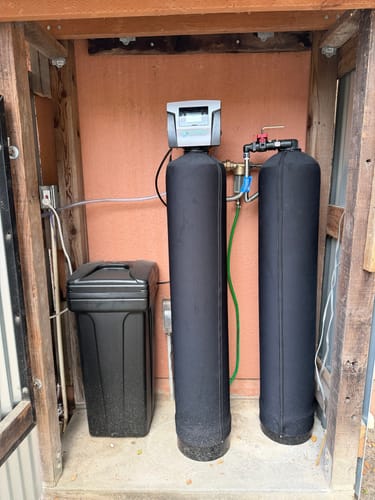
After eighteen months of operation, I've gained deep appreciation for the engineering behind this filtration system. The upflow design is particularly clever – instead of water flowing downward through the media bed, it enters at the bottom and flows upward. This creates several advantages I didn't fully appreciate initially.
The upflow configuration prevents media compaction and channeling that can occur in traditional downflow systems. As water flows upward, it gently lifts and suspends the filter media, ensuring maximum contact surface area and preventing dead zones where untreated water might bypass the filtration process.
The catalytic carbon media performs differently than standard activated carbon in ways that become apparent over time. Rather than simply absorbing contaminants, it actually breaks down chloramines through catalytic destruction. I've measured consistent chloramine removal even after processing thousands of gallons, whereas standard carbon systems typically show declining efficiency much sooner.
The bone char component targets fluoride through a process called chemisorption, where fluoride ions are chemically bound to the calcium phosphate structure of the bone char. This is why fluoride removal remains effective even as the carbon portion of the media becomes loaded with other contaminants.
The automatic backwash system operates based on actual water usage rather than arbitrary time intervals. The control valve tracks gallons processed and initiates backwash cycles when the media bed needs cleaning. This demand-based operation optimizes media life while maintaining consistent performance.
During backwash, the flow direction reverses, lifting and agitating the media to remove trapped particles and redistribute the bed. The entire cycle takes about 12 minutes and uses approximately 25 gallons of water. I've found this occurs roughly every 8-10 days with our family's usage pattern.
The system maintains 6-8 GPM flow rates at normal household pressures without noticeable pressure drop. During peak demand situations – multiple showers, dishwasher, and laundry running simultaneously – I measure less than 2 PSI pressure reduction compared to unfiltered supply.
One feature I've come to appreciate is the manual regeneration capability. If we're expecting guests or unusually high water usage, I can initiate an immediate backwash cycle to ensure optimal performance during peak demand periods.
Performance Results: Measurable Improvements
Testing water quality before and after installation provided concrete evidence of the system's effectiveness. Using both home test kits and professional laboratory analysis, I've documented consistent performance improvements across multiple parameters.
Chlorine reduction has been complete and consistent. Pre-installation measurements of 2.8 PPM chlorine dropped to non-detectable levels (less than 0.1 PPM) immediately after installation and have remained there throughout the eighteen-month period. The strong chemical smell that was noticeable when filling the bathtub is completely eliminated.
Fluoride removal averages 85-90% based on quarterly testing. Our municipal supply fluctuates between 0.8-1.1 PPM fluoride, and post-filtration levels consistently measure 0.1-0.15 PPM. While not complete removal, this reduction addresses my family's preference for lower fluoride exposure while maintaining some level for dental benefits.
Chloramine elimination has been the most impressive result. These persistent disinfectants, which were reading 1.6 PPM in our supply, are reduced to undetectable levels. This explains the dramatic improvement in water taste and the reduction in skin irritation family members had been experiencing.
Total dissolved solids dropped from 340 PPM to 280 PPM – a modest but meaningful reduction that represents removal of various dissolved contaminants while preserving beneficial minerals. Unlike reverse osmosis, this system doesn't strip water to near-zero TDS levels, maintaining a more natural mineral balance.
pH stabilization was an unexpected benefit. Our supply water pH fluctuated between 7.2-8.1 depending on seasonal treatment variations. Post-filtration pH consistently measures 7.4-7.6, suggesting the bone char media provides some buffering capacity.
Taste and odor improvements were immediate and dramatic. Coffee and tea preparation shows significantly cleaner, brighter flavors. Cooking with filtered water has enhanced food tastes, particularly noticeable in soups, pasta water, and bread making where water quality directly impacts final results.
Appliance impact has been positive but gradual. Our dishwasher shows less mineral spotting on glassware, and the coffee maker requires descaling less frequently. The water heater efficiency appears improved based on our utility bills, though multiple variables make this difficult to quantify precisely.
Real-World Living Impact: Daily Life Improvements
The most meaningful measure of any home improvement is how it affects daily life, and this filtration system has delivered benefits I didn't anticipate when making the purchase decision.
Morning routines improved noticeably within the first week. Coffee preparation became more consistent and flavorful, eliminating the need for bottled water that we'd started using for our espresso machine. My wife's tea ritual returned to using tap water instead of the filtered pitcher she'd relied on for months.
Shower experiences changed in subtle but important ways. The skin dryness and occasional irritation that had developed gradually over the previous year disappeared within two weeks. Our teenage daughter, who has sensitive skin, commented that her complexion improved, though multiple factors could contribute to this.
Household cleaning became easier in unexpected ways. The film buildup on shower doors and bathroom fixtures that had required increasingly aggressive cleaners now wipes away with basic cleaning solutions. Glass surfaces stay cleaner longer, and soap scum formation is noticeably reduced.
Cooking improvements extend beyond taste to practical preparation benefits. Pasta water boils cleaner without the slight foaming that occurred previously. Bread making produces more consistent results, and soups and stocks have cleaner, more pronounced flavors that highlight ingredients rather than competing with water chemistry.
Laundry results show subtle but real improvements. Clothing feels softer and colors appear more vibrant, though we haven't changed detergents or washing procedures. White fabrics maintain their brightness longer, requiring less frequent brightening treatments.
Ice production in our refrigerator improved dramatically. The slightly cloudy, off-tasting ice that had become normal is now crystal clear and neutral in flavor. This was particularly noticeable during summer entertaining when ice quality becomes more apparent.
Guest reactions have provided external validation of the improvements. Multiple visitors have commented positively on water taste without prompting, and several have asked about our filtration system after experiencing the difference in coffee and cooking.
Seasonal variations in municipal water quality, which previously affected taste and odor noticeably during certain periods, are now completely masked by consistent filtration performance.
Honest Assessment: What Could Be Better
After eighteen months of ownership, I've identified several limitations and minor frustrations that potential buyers should understand before making their decision.
The initial water waste during backwash cycles can be concerning for environmentally conscious users. Each regeneration cycle uses 25 gallons, and with cycles occurring every 8-10 days, this represents approximately 100 gallons monthly of "waste" water. While this water isn't actually contaminated – it's just used for cleaning the media – it's still a consumption consideration.
Installation space requirements are more substantial than I initially calculated. Beyond the tank itself, you need clearance above for potential media replacement and around the sides for plumbing access. In tight utility rooms or basements, this can be challenging to accommodate properly.
The control valve, while generally reliable, can be sensitive to power fluctuations. We've experienced two instances where brief power outages reset the system settings, requiring manual reconfiguration. This isn't difficult, but it's an unexpected maintenance requirement.
Media replacement costs, while reasonable compared to other filtration methods, represent a significant ongoing expense. The bone char portion requires replacement approximately every 18-24 months at a cost of $150-200, while the catalytic carbon lasts 24-36 months at $100-150. This translates to roughly $100-150 annually in consumables.
The system performance is sensitive to incoming water temperature and pressure variations. During winter months when incoming water temperature drops, I've noticed slightly reduced efficiency that requires more frequent backwash cycles to maintain optimal performance.
Fluoride removal, while substantial, isn't complete. Families seeking total fluoride elimination would need to consider additional point-of-use treatment for drinking water. The 85-90% reduction is excellent but may not satisfy those with the highest concerns about fluoride exposure.
Backwash noise, while not excessive, is noticeable when cycles occur during quiet evening or early morning hours. The process involves motor operation and water flow that can be heard in adjacent rooms, though it only lasts about 12 minutes.
Technical support, while knowledgeable, operates during standard business hours. When I had questions during weekend installation, I had to wait until Monday for assistance. Online resources are helpful but sometimes lack the specific detail needed for troubleshooting.
Despite these limitations, none represent deal-breakers for my situation. Understanding these constraints helps set appropriate expectations and plan for the long-term ownership experience.