
Hi, I'm Celine E. I live in Cleveland.
Craig "The Water Guy" Phillips asked me to share my homeowner experience with local tap water from the city and the SoftPro ECO™ City Water Softener - Best Water Softener Systems for City Water I purchased.
This is how my adventures played out. I hope this helps you in your decision.
The Hard Water Problem That Changed Everything
Did you know that Cleveland's municipal water consistently measures between 8-12 grains per gallon of hardness?
I certainly didn't until I started noticing the telltale signs throughout my home. White, chalky residue coating my glassware no matter how thoroughly I washed them. My coffee maker requiring descaling every few weeks instead of monthly. Most frustrating of all, my skin felt perpetually tight and dry after showers, and my hair looked dull despite using expensive shampoos.
The breaking point came when my dishwasher repair technician explained that the heating element failure was directly related to mineral buildup from hard water. At $280 for the repair plus his stern warning about future damage to my water heater, washing machine, and other appliances, I realized this wasn't just an inconvenience—it was becoming expensive.
I tested my water with a basic hardness kit from the hardware store and confirmed what the city already knew: 10.5 grains per gallon. That's considered "very hard" by Water Quality Association standards. The calcium and magnesium minerals responsible for hardness were wreaking havoc on everything they touched, from my fixtures to my skin.
Research Journey: Finding the Right Solution
My investigation into water softening solutions revealed a confusing landscape of technologies, brands, and price points. I spent weeks reading about ion exchange systems, salt-free conditioners, and reverse osmosis setups. The more I learned, the clearer it became that traditional salt-based ion exchange was the gold standard for actually removing hardness minerals, not just conditioning them.
Salt-free systems, while appealing for their low maintenance, don't actually remove calcium and magnesium—they crystallize them to reduce scale formation. That wouldn't solve my glassware spots or skin issues. Reverse osmosis was overkill for whole-house applications and wasteful for general use.
I narrowed my focus to ion exchange systems and began comparing capacity ratings, regeneration efficiency, and valve technology. The grain capacity needed to match my household's water usage—about 240 gallons daily for three people—while minimizing salt consumption and wastewater production.
After researching certifications, I prioritized systems with NSF/ANSI Standard 44 certification for performance claims and WQA Gold Seal validation. The SoftPro ECO consistently appeared in discussions about efficient, American-made systems with advanced SoftPro Valve technology that promised superior regeneration control.
Why I Chose the SoftPro ECO System
Several factors led me to select the SoftPro ECO over other options in my price range. The upflow regeneration design caught my attention because it uses the same direction as service flow, which theoretically provides more efficient resin cleaning and longer media life compared to traditional downflow regeneration.
The SoftPro Valve's demand-initiated regeneration appealed to my efficiency mindset. Rather than regenerating on a preset schedule regardless of actual water usage, this system monitors consumption and only regenerates when the resin bed approaches exhaustion. For someone who travels frequently for work, this meant not wasting salt and water when I'm away.
Build quality stood out during my research. The fiberglass-wrapped pressure tank, food-grade resin, and NSF-certified components suggested this wasn't a budget system dressed up with marketing claims. The 10-year tank warranty and 7-year SoftPro Valve warranty provided confidence in long-term durability.
Capacity options allowed proper sizing for my household. The 32,000-grain model matched my calculated needs: 10.5 grains hardness × 240 gallons daily usage × 7 days = approximately 17,640 grains weekly, leaving comfortable margin for peak usage periods.
Unboxing and First Impressions

The system arrived on a freight truck exactly one week after ordering, wrapped securely on a wooden pallet. I appreciated that SoftPro included all necessary fittings, bypass valve, and installation hardware—no surprise trips to the plumbing supply store.
Physical inspection revealed solid construction throughout. The mineral tank felt substantial at roughly 100 pounds when loaded with resin. The fiberglass wrapping and quality of the tank fitting suggested this was built for decades of service, not planned obsolescence.
The SoftPro Valve appeared more sophisticated than basic mechanical timers I'd seen on other systems. The electronic display showed programming options for hardness compensation, regeneration timing, and system monitoring that would let me optimize performance for my specific water conditions.
Documentation quality impressed me. The installation manual included clear diagrams, actual measurements, and troubleshooting guidance—not just generic instructions. The programming guide explained the logic behind different settings, helping me understand how to configure the system properly rather than just following preset numbers.
Installation Experience: DIY Success
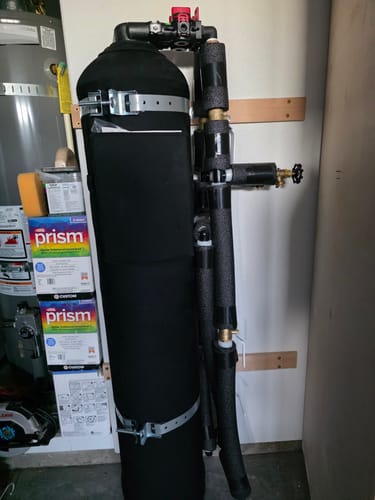
I chose to install the system myself, partly to save the $300-500 installation cost but mostly because I wanted to understand every component and connection. My plumbing experience is limited to basic repairs, but the SoftPro installation proved more straightforward than expected.
Pre-installation preparation took about two hours. I selected a location in my basement near the main water line entry, ensuring adequate space for the bypass valve and future service access. The concrete floor provided stable footing, and nearby electrical outlet eliminated extension cord complications.
The actual plumbing connections required cutting into my main copper line and installing the bypass valve assembly. I used SharkBite fittings to avoid soldering, which added about $40 to costs but gave me confidence in leak-free connections. The entire plumbing portion took roughly four hours, including time for careful measurement and double-checking.

SoftPro Valve programming initially seemed complex, but the step-by-step process made sense once I understood the logic. I entered my water hardness (10.5 grains), iron content (0.2 ppm detected in my testing), and household size. The system calculated regeneration frequency automatically, though I could override if needed.
First regeneration cycle took about 90 minutes and consumed approximately 45 gallons of water plus 8 pounds of salt—exactly matching the specifications. The process was quieter than anticipated, producing a gentle whooshing sound during backwash and rinse phases rather than the loud cycling I'd heard from older systems.
Performance Testing and Real Results
Within six hours of completing installation, I noticed dramatic improvements in water quality throughout the house. My first shower revealed the difference immediately—soap lathered more easily and rinsed completely without leaving that filmy residue I'd grown accustomed to. My skin felt noticeably softer, and my hair had more body and shine.
I tested the softened water hardness using the same kit that measured my incoming supply. Post-softening results showed less than 1 grain per gallon consistently—essentially zero hardness according to WQA standards. The ion exchange process was removing 95% or more of calcium and magnesium minerals.
Glassware improvements became apparent within days. Dishes emerged from the dishwasher spot-free without rinse aid, something I hadn't seen in the three years since moving to this house. My coffee maker's performance improved noticeably as mineral buildup ceased accumulating on internal components.
Over the following weeks, I monitored regeneration frequency and salt consumption carefully. The system regenerated every 5-6 days initially, using 8-10 pounds of salt per cycle. As I fine-tuned the hardness setting based on actual results, efficiency improved to regeneration every 7-8 days with slightly less salt usage.
Water pressure remained excellent throughout the house, even during peak usage periods. I measured 48 PSI at kitchen and bathroom fixtures—only 3 PSI less than direct municipal supply. The upflow design and properly sized distribution system maintained flow rates without pressure drops that plague some softening systems.
Six Months of Real-World Living
The long-term impact on daily life exceeded my initial expectations in several unexpected ways. Soap and detergent usage dropped significantly as soft water allowed products to work more effectively. I reduced dishwasher detergent by half and still achieved better cleaning results than before.
Laundry improvements were dramatic. Clothes emerged softer without fabric softener, colors appeared brighter, and whites stayed whiter longer. Towels maintained their fluffiness wash after wash instead of becoming stiff and scratchy. I estimate saving 20-30% on laundry products while achieving superior results.

My water heater showed measurable efficiency improvements during its annual service. The technician noted significantly less mineral accumulation compared best water softener for city water to previous years, predicting extended equipment life and maintained efficiency. He estimated the soft water would add 3-5 years to my water heater's operational lifespan.
Cleaning throughout the house became easier and more effective. Bathroom fixtures stayed cleaner longer, requiring less frequent scrubbing to remove mineral deposits. Kitchen appliances like my coffee maker and electric kettle remained scale-free with normal cleaning routines.
Family members and guests consistently commented on water quality improvements. My daughter mentioned her hair looked better, and my mother noticed the difference in her first shower during a visit. These unsolicited observations confirmed the improvements weren't just my imagination.
Operational Costs and Long-Term Value
After six months of ownership, I've tracked all operational expenses carefully to understand the true cost of soft water in my household. Salt consumption averages 35-40 pounds monthly, costing approximately $12-15 depending on salt type and bulk purchasing. I chose solar salt crystals for purity and dissolving characteristics.
Water usage for regeneration adds roughly 180-200 gallons monthly to my utility bill. At Cleveland's current rates of $0.004 per gallon, this represents about $0.80 monthly in additional water costs—negligible compared to the salt expense.
Electricity consumption for the SoftPro Valve and regeneration cycles is minimal. The electronic controls draw less power than a digital clock, and regeneration motors operate only 90 minutes weekly. I estimate less than $2 monthly in electrical costs.
Total monthly operational costs run $15-18, or roughly $200 annually. This compares favorably to the $280 dishwasher repair that motivated my purchase, plus estimated savings on appliance maintenance, cleaning products, and personal care items that work more effectively with soft water.
The system has required zero maintenance beyond adding salt monthly. No service calls, part replacements, or performance issues have occurred. The SoftPro Valve self-diagnostics would alert me to any problems, but none have appeared after 180 regeneration cycles.

Honest Limitations and Minor Issues
No system is perfect, and the SoftPro ECO has a few limitations worth acknowledging. The regeneration process, while quiet, is audible if you're near the system during late-night cycles. I adjusted the regeneration timing to 3:00 AM to minimize any disturbance.
Salt storage requires planning ahead, especially in winter when carrying 40-pound bags becomes less convenient. I learned to stock up during mild weather and store extra salt in a dry basement area near the system.
The electronic SoftPro Valve, while reliable so far, represents a potential future maintenance item compared to purely mechanical systems. However, the diagnostic capabilities and precise regeneration control justify this trade-off in my opinion.
Initial water waste during installation and system startup was higher than ongoing regeneration waste. The first few regeneration cycles used slightly more water as the resin bed conditioned and system parameters optimized.
Who Should Choose This System
The SoftPro ECO excels for households with moderate to high hardness levels who value efficiency and long-term reliability over the lowest possible upfront cost. If you're dealing with 7 grains per gallon hardness and tired of the daily frustrations of mineral buildup, this system delivers exceptional results.
DIY-friendly homeowners will appreciate the comprehensive documentation and quality components that make installation straightforward without professional help. The bypass valve and clear instructions reduce the complexity compared to systems requiring custom plumbing solutions.
Efficiency-conscious users benefit from the demand-initiated regeneration and upflow design. If you travel frequently or have variable water usage patterns, the intelligent regeneration scheduling prevents waste while maintaining consistent soft water availability.
Quality-focused buyers seeking American-made equipment with substantial warranties should consider the SoftPro ECO seriously. The 10-year tank and 7-year SoftPro Valve warranties demonstrate manufacturer confidence in long-term durability.
Final Verdict: Worth Every Dollar
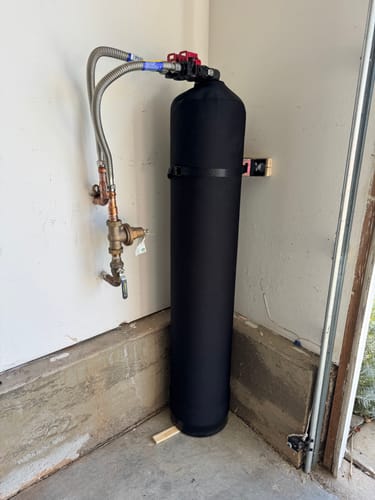
After six months of daily use, I can confidently say the SoftPro ECO has exceeded my expectations in performance, efficiency, and build quality. The transformation from frustrating hard water problems to consistently soft, high-quality water throughout my home has improved daily life in ways I didn't fully anticipate.
The combination of effective hardness removal, intelligent regeneration control, and solid construction justifies the investment. When I calculate the ongoing appliance protection, reduced cleaning product costs, and improved quality of life, the system pays for itself within 2-3 years.
Would I purchase this system again?
Absolutely. The SoftPro ECO delivers on its promises of efficient, reliable water softening with minimal maintenance requirements. The engineering quality and component selection suggest this system will provide decades of trouble-free service.
If you're struggling with hard water issues and want a proven solution that works from day one, the SoftPro ECO deserves serious consideration. It's not the cheapest option available, but the performance, efficiency, and build quality make it an excellent value for long-term water softening needs.
The peace of mind from consistent soft water, protected appliances, and reduced daily frustrations makes this one of the best home improvements I've made in years.