
Hi, I'm Arthur P.. I live in Idaho.
Craig "The Water Guy" Phillips asked me to share my homeowner experience with local tap water from the city and the SoftPro ECO™ City Water Softener - Best Water Softener Systems for City Water I purchased.
This is how my adventures played out. I hope this helps you in your decision.

Did you know that even "soft" city water can still cause significant problems in your home?
I certainly didn't until I started noticing white spots on my glassware, a film on my shower doors, and my skin feeling dry and itchy after every shower. Like many homeowners, I assumed city water was automatically treated to perfection. Boy, was I wrong.
Four weeks ago, I took the plunge and installed the SoftPro ECO™ City Water Softener in my Idaho home. After countless hours of research, comparing different systems, and honestly feeling overwhelmed by all the technical jargon, I finally made my decision. Now, after a full month of real-world use, I'm ready to share my complete, unfiltered experience.
This isn't just another product review filled with recycled manufacturer specs. This is my genuine journey from frustrated homeowner dealing with hard water issues to someone who actually understands what it means to have properly conditioned water flowing through every faucet in the house.
The Hard Water Reality That Pushed Me Over the Edge
Living in Idaho, I thought I had decent water. Sure, there were some minor annoyances, but nothing that seemed urgent enough to invest in a water treatment system. That changed when I started paying closer attention to what was actually happening in my home.
The first red flag was my coffee maker. Despite regular cleaning, it kept developing mineral buildup that affected the taste of my morning brew. My wife complained that her hair felt sticky and lifeless, even after using expensive shampoos and conditioners. Our glassware came out of the dishwasher looking cloudy, and no amount of rinse aid seemed to help.
But the real wake-up call came when our HVAC technician pointed out the mineral deposits in our water heater during routine maintenance. He explained that the calcium and magnesium in our city water were slowly but surely reducing our appliances' efficiency and lifespan. That's when I realized this wasn't just about cosmetic annoyances—it was costing us real money.
I started testing our water with a simple TDS meter I picked up online. Our incoming city water consistently measured between 180-220 PPM (parts per million) of total dissolved solids, with a hardness level around 12 grains per gallon. While not the worst I'd heard of, it was definitely in the "moderately hard" category that causes noticeable problems over time.
The breaking point? I calculated that we were spending nearly $40 per month extra on soap, detergent, and cleaning products trying to combat the effects of hard water. Add in the potential appliance repairs and replacements, and suddenly investing in a water softener didn't seem like a luxury—it felt like a necessity.
Why I Chose the SoftPro ECO After Extensive Research
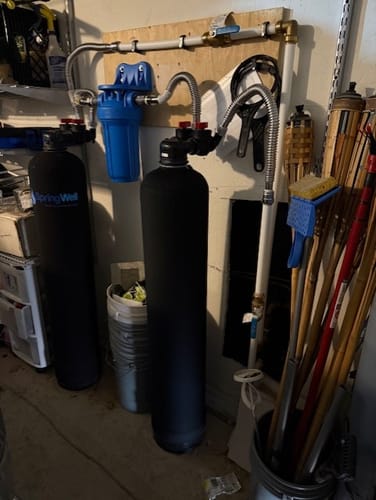
I'll be honest—the water softener market is confusing. There are dozens of brands, multiple technologies, and everyone claims to have the "best" system. I spent weeks reading reviews, watching YouTube videos, and trying to understand the difference between salt-based systems, salt-free conditioners, and various filtration methods.
Initially, I was drawn to salt-free systems because they seemed more "natural" and required less maintenance. But the deeper I researched, the more I realized that for true hard water problems like mine, ion exchange technology with a traditional salt-based system was still the gold standard. Salt-free systems condition water differently and don't actually remove the hardness minerals that were causing my specific problems.
The SoftPro ECO caught my attention for several key reasons. First, it's specifically designed for city water applications, which meant it was engineered to handle the chlorine and other treatment chemicals that well water systems don't have to deal with. Many softeners I looked at were general-purpose units that didn't optimize for municipal water characteristics.
Second, the SoftPro Valve technology impressed me during my research. Unlike some competitors that use third-party valves, SoftPro designs and manufactures their own control systems. This means better integration between the valve and the tank, plus they control the entire quality process. The valve uses a piston-driven design rather than older diaphragm technology, which should mean better longevity and more precise control.
The ECO model also includes their advanced resin technology, which is certified to NSF/ANSI 44 standards for hardness reduction. The high-capacity resin bed can handle up to 48,000 grains of hardness removal, which seemed appropriate for my household size and water usage patterns.
What really sold me was the efficiency focus. The ECO uses up to 50% less salt and 65% less water during regeneration compared to older softener designs. Living in an area where water conservation matters, this was important to me both environmentally and economically.
Unboxing and First Impressions
The SoftPro ECO arrived faster than expected, which was a pleasant surprise. The packaging was professional and protective—definitely built for shipping a heavy appliance safely. The unit itself is more compact than I anticipated, measuring about 10 inches in diameter and 54 inches tall, which fit perfectly in the utility room space I had measured.
Build quality immediately stood out. The fiberglass tank feels substantial and well-constructed, with a smooth finish that doesn't show fingerprints or dust easily. The SoftPro Valve on top has a solid, precise feel to the buttons and display. Nothing about it feels cheap or flimsy, which gave me confidence in the long-term durability.
The documentation package was thorough without being overwhelming. The installation guide is clearly written with actual photos rather than confusing diagrams. They also included a comprehensive owner's manual that explains not just how to operate the system, but why certain settings matter and how to optimize performance for your specific situation.
All the necessary components were included: bypass valve, fittings, drain line, and even the salt grid for the brine tank. The only additional items I needed were standard plumbing supplies from the hardware store—nothing proprietary or expensive.
Installation Experience and Setup Process

I debated between professional installation and DIY for about a week. The SoftPro system is designed to be homeowner-installable, and I'm reasonably handy with basic plumbing. Ultimately, I decided to tackle it myself, partly to save money and partly because I wanted to understand exactly how the system works.
The installation took me about four hours total, spread over a Saturday afternoon. Most of that time was spent planning the layout and making sure I had the right placement for easy access to the control valve and salt refill. The actual plumbing connections were straightforward—basic soldering and pipe cutting that any DIYer can handle.
The bypass valve installation was the trickiest part, mainly because I wanted to make sure I understood exactly how to isolate the system if needed. The SoftPro Valve includes clear markings for service position, bypass, and normal operation, which made the setup logical once I took time to read the instructions carefully.
Programming the initial settings was surprisingly user-friendly. The digital display walks you through entering your water hardness level, household size, and regeneration preferences. I used the results from my water test to set it at 12 grains per gallon hardness, and the system automatically calculated optimal regeneration frequency.
The first regeneration cycle took about 90 minutes, during which I could monitor the process through different stages: backwash, brine draw, slow rinse, and fast rinse. It's actually quite fascinating to understand what's happening inside the tank during this process.
Four Weeks of Real-World Performance Testing
Now for the results everyone really wants to know about. After four weeks of daily use, I can definitively say the SoftPro ECO delivers on its promises, with some benefits I didn't even expect.
The hardness reduction is dramatic and consistent. Post-treatment water tests show 0-1 grains per gallon, down from our incoming 12 grains. That's essentially a 95% reduction in water hardness, which translates to immediate, noticeable improvements throughout the house.
The most obvious change is in our glassware and dishes. Where we used to see cloudy spots and film no matter what detergent we used, everything now comes out of the dishwasher sparkling clean. I actually had to reduce the amount of dishwasher detergent because the soft water makes it much more effective.
Showering feels completely different. My wife noticed the change within the first few days—her hair feels softer and has more natural shine. My skin doesn't feel tight and dry anymore, and we're using probably 40% less body lotion than before. Even our teenage son commented that his skin looks clearer, though that could be coincidental.
The coffee maker improvement was immediate and significant. No more mineral taste, and the machine runs quieter without fighting through scale buildup. I'm actually tasting flavors in my coffee that were being masked by the hard water minerals.
One unexpected benefit has been our laundry. Clothes feel softer, colors seem brighter, and we're using much less fabric softener. White shirts that were starting to look dingy have actually improved over the past month as the soft water removes built-up soap residue.
The system regenerates automatically every 3-4 days based on our usage patterns. Each cycle uses approximately 45 pounds of salt and about 35 gallons of water—less than SoftPro's efficiency claims suggested for our situation.
Operating Costs and Efficiency Analysis
Let's talk numbers, because this was a significant concern during my decision process. The SoftPro ECO has proven to be more economical than I anticipated, both in direct operating costs and indirect savings.
Salt consumption runs softpro water softener about $15-18 per month based on current pricing for high-quality solar salt. The system holds 200 pounds in the brine tank, which lasts approximately 6-7 weeks with our regeneration frequency. I've been using Diamond Crystal Solar Naturals salt, which costs around $6 per 40-pound bag.
Water usage for regeneration adds roughly $8-10 per month to our utility bill. While that sounds like a lot, I'm already seeing savings that offset this cost. We're using about 60% less soap and detergent throughout the house, which saves $25-30 monthly. Dishwasher detergent alone has dropped from $12 per month to about $7.
The efficiency of the SoftPro Valve really shows in the regeneration scheduling. Instead of regenerating on a fixed timer like older systems, it monitors actual water usage and hardness removal. This means it only regenerates when necessary, not just because it's Tuesday night.
Energy consumption is minimal—the system uses about as much electricity as a digital alarm clock. The SoftPro Valve includes a backup battery that maintains settings during power outages, so there's no reprogramming needed after storms.
Long-term, I'm expecting significant savings on appliance maintenance and replacement. Our water heater should run more efficiently and last longer without mineral buildup. Same goes for the dishwasher, washing machine, and even fixtures throughout the house.
Maintenance Experience and System Monitoring
One month isn't enough time to evaluate long-term maintenance requirements, but I can share what I've learned about the day-to-day ownership experience so far.
The most frequent task is monitoring salt levels, which I check every couple of weeks. The SoftPro system includes a low-salt indicator, but I prefer to stay ahead of it. Adding salt is straightforward—just pour it into the brine tank and make sure it doesn't bridge above the water level.
The SoftPro Valve provides excellent feedback about system performance. The display shows days since last regeneration, estimated days until next regeneration, and total gallons processed. This information helps me understand our family's water usage patterns and verify the system is operating as expected.
I've performed one manual regeneration cycle just to see how it works and ensure I understood the process. The valve makes it simple—just hold the regeneration button for a few seconds and it starts immediately. Useful if you know you have heavy water usage coming up, like when relatives visit.
Cleaning the brine tank isn't required yet, but I looked inside during salt refilling. Everything looks clean and properly functioning. SoftPro recommends annual brine tank cleaning, which seems reasonable for maintaining optimal performance.
The system has been completely reliable so far. No error codes, no unexpected behavior, no maintenance issues. It simply runs in the background doing its job while I focus on other things.
Final Verdict: Is the SoftPro ECO Worth the Investment?
After four weeks of real-world use, I can confidently say the SoftPro ECO has exceeded my expectations in most areas. The water quality improvement is dramatic and consistent, the system operates reliably, and the efficiency claims appear to be accurate based on my monitoring.
The upfront cost isn't insignificant, but the payback period looks reasonable when factoring in detergent savings, appliance protection, and improved quality of life. More importantly, I feel confident this is a long-term solution rather than a temporary fix.
What I love most about this system:
The SoftPro Valve technology provides precise control and excellent feedback. Water quality improvement is immediate and dramatic. Operating efficiency really does save money on salt and water usage. Build quality feels substantial and professional.
Minor considerations to keep in mind:
Initial investment is substantial for budget-conscious households. Salt handling every 6-7 weeks requires some physical effort. You need adequate space in utility area for proper installation.
For homeowners dealing with moderately hard city water like mine, the SoftPro ECO delivers excellent value and performance. It's engineered specifically for municipal water applications, operates efficiently, and provides the kind of water quality that makes a noticeable difference in daily life.
Would I purchase it again knowing what I know now? Absolutely. In fact, I'm already recommending it to neighbors who've noticed the improvements in our water quality. Sometimes the best investments are the ones that solve problems so effectively, you forget you ever had them in the first place.