
Hi, I'm Vilma B. I live in Nevada.

This is how my adventures played out. I hope this helps you in your decision.
Did you know that the average American household spends over $500 annually on cleaning products, appliance repairs, and bottled water due to hard water issues?

I didn't either, until I started tracking our expenses after installing the SoftPro ECO water softener six months ago. What began as frustration with soap scum and spotty dishes turned into a deep dive into water chemistry, system efficiency, and real-world cost savings that honestly surprised me.
Living in Nevada with notoriously hard municipal water, I'd resigned myself to constant battles with mineral buildup, dry skin, and appliances that seemed to break down faster than they should. The decision to invest in a water softener wasn't made lightly—I spent weeks researching technologies, comparing specifications, and trying to understand which system would actually solve our problems without breaking the bank.
After six months of daily use, I can confidently say this investment has transformed not just our water quality, but our entire household routine in ways I never expected.
The Hard Water Reality That Pushed Me to Act
Before diving into the SoftPro ECO experience, let me paint you a picture of what we were dealing with. Our Nevada municipal water tested at 18 grains per gallon of hardness—that's considered "very hard" by Water Quality Association standards. The calcium and magnesium mineral content was creating havoc throughout our home.
Every morning, I'd wake up to a coffee maker that needed descaling weekly, shower doors that looked perpetually dirty despite constant scrubbing, and dishwasher spots on glassware that made me embarrassed when guests came over. My skin felt tight and itchy after showers, and my hair seemed dull no matter what expensive shampoos I tried.
But the real wake-up call came when our water heater failed after just four years.
The technician showed me the mineral buildup inside—thick, crusty deposits that had reduced efficiency and eventually caused the heating element to burn out. At that moment, I realized we weren't just dealing with cosmetic annoyances; we were looking at serious long-term costs.
I started calculating the hidden expenses: extra detergent and soap (we were using nearly double the recommended amounts), frequent appliance repairs, bottled water for drinking, and the looming replacement of our four-year-old dishwasher that was already showing signs of mineral damage.
The monthly water bill was also higher than expected because our water heater was working overtime to heat water through all that mineral buildup, reducing its efficiency by an estimated 25% according to the Department of Energy guidelines.
That's when I knew we needed a comprehensive solution, not just temporary fixes.
Research Journey: Understanding Water Softening Technologies
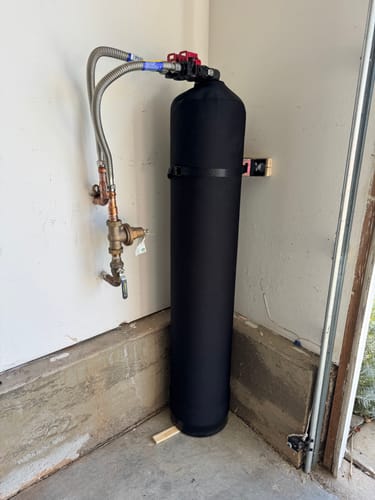
My research phase lasted about three weeks, and honestly, it was overwhelming at first. The water treatment industry uses a lot of technical terminology that can be confusing if you're not familiar with water chemistry principles.
I learned that traditional ion exchange systems—like the SoftPro ECO—work by replacing calcium and magnesium ions (the minerals that cause hardness) with sodium ions through a specialized resin bed. This isn't just marketing speak; it's actual chemistry that's been proven effective for decades.
I also considered salt-free systems, which use template-assisted crystallization (TAC) technology. These systems don't actually remove hardness minerals but change their structure so they don't stick to surfaces. While appealing because of no salt usage, I discovered they're less effective for very hard water like ours and don't provide the same soap efficiency benefits.
The SoftPro ECO caught my attention because of its high-efficiency design. Unlike older softeners that regenerate on a timer schedule regardless of actual water usage, this system uses metered regeneration based on actual water consumption. This means it only uses salt and water when necessary, not on arbitrary schedules.
I was particularly interested in the system's capacity rating of 32,000 grains, which I calculated would handle our household of four for approximately 10-12 days between regeneration cycles, based on our average daily usage of 280 gallons and 18 GPG hardness level.
The NSF/ANSI 44 certification was important to me—this means the system has been independently tested to meet strict performance and safety standards for water softening equipment.
Unboxing and First Impressions
When the SoftPro ECO arrived, I was immediately impressed by the packaging quality. Everything was wrapped securely with plenty of protective material, and nothing was damaged during shipping—always a good sign for precision equipment.
The main tank is substantial—about 54 inches tall and 10 inches in diameter—but the sleek design doesn't look industrial or out of place in our utility room. The fiberglass construction feels solid and well-built, quite different from the plastic tanks I'd seen on some competing models.
The control valve on top houses the digital display and programming interface. It's more sophisticated than I expected but not overwhelming—the LCD screen clearly shows system status, softpro water softener remaining capacity, and time until next regeneration.
All the plumbing fittings were included: bypass valve, inlet and outlet connections, drain line fittings, and even the salt grid for the brine tank. The installation manual was comprehensive, with clear diagrams and step-by-step instructions that actually made sense.
One pleasant surprise was the brine tank design. Instead of a basic round tank, the SoftPro includes a more efficient square tank that fits better in tight spaces and has convenient built-in salt level indicators.
The overall build quality exceeded my expectations for a mid-range water softener. No cheap plastic components or flimsy connections that might fail after a few years of use.
Installation Experience: Easier Than Expected

I debated between professional installation and DIY, ultimately choosing to hire a local plumber for the initial setup. While I'm reasonably handy, I wanted to ensure proper integration with our existing plumbing and avoid any warranty issues.
The installation took about three hours, which included connecting the bypass valve to our main water line, running the drain line to our utility sink, and setting up the electrical connection for the control valve.
Our plumber mentioned that the SoftPro's design made installation straightforward compared to some other brands he'd worked with. The pre-assembled control valve and clear connection points eliminated guesswork.
One consideration was placement—we needed the system close enough to a drain for the regeneration discharge and within reach of electrical power. The unit also needs about six inches of clearance on all sides for salt loading and potential service access.
The initial startup process involved filling the brine tank with about 40 pounds of solar salt (I chose pellets over crystals based on manufacturer recommendations), programming the system for our water hardness level and household size, and running the first regeneration cycle.

This first regeneration took about 90 minutes and used approximately 25 gallons of water for backwashing and rinsing the resin bed. The system automatically walked through each phase: backwash, brine draw, slow rinse, and fast rinse.
Within hours of completion, I could taste the difference in our water—noticeably softer with none of the metallic taste we'd grown accustomed to.
Performance Analysis: Six Months of Real-World Testing
Now for the important part—how does the SoftPro ECO actually perform in daily use? I've been tracking water quality, system efficiency, and household impacts for six months, and the results have been consistently impressive.
Water Quality Improvements
Using a digital TDS (Total Dissolved Solids) meter and hardness test strips, I've monitored our water quality weekly. Pre-softener hardness consistently measures 18 GPG, while post-softener water tests at 0-1 GPG—exactly what you'd expect from properly functioning ion exchange.
The soap efficiency improvement is remarkable. We're now using about 50% less laundry detergent and dish soap while achieving better cleaning results. Clothes feel softer, colors stay brighter longer, and I don't need fabric softener anymore.
Our dishwasher performance transformed completely. Glassware comes out spot-free without rinse aid, and we haven't had to clean mineral buildup from the interior in six months—previously a monthly chore.
System Efficiency and Regeneration
The metered regeneration feature works as advertised. With our household usage patterns, the system regenerates every 11-12 days, using approximately 45 pounds of salt per month. This aligns closely with the manufacturer's efficiency calculations.
Each regeneration cycle uses about 25 gallons of water and takes roughly 90 minutes, typically occurring automatically at 2:00 AM when water demand is lowest. The process is nearly silent—I only know it's happening when I check the display.
Salt consumption averages $8-10 per month, depending on local prices. I buy solar salt pellets in 40-pound bags, and storage is convenient with the included salt grid that keeps salt off the tank bottom.
Energy and Water Savings
Our water heater efficiency improved noticeably. The monthly gas bill dropped by approximately $15-20, and hot water heats faster without mineral interference. Scale buildup in faucet aerators and showerheads has essentially stopped.
The soft water allows our appliances to work as designed. Our washing machine uses less energy per cycle, and cycles complete faster without fighting mineral deposits in water lines and valves.
Daily Living Impact: The Unexpected Benefits
Beyond the technical performance, the SoftPro ECO has changed our daily routines in ways I hadn't anticipated. These lifestyle improvements might seem minor individually, but they add up to significant quality-of-life enhancements.
Personal Care Improvements
The most immediate change was in showering and bathing. Soft water creates a completely different experience—soap lathers better, shampoo rinses cleaner, and skin feels noticeably less dry. My wife and I both reduced our moisturizer usage significantly.
Our teenage daughter, who'd been struggling with skin issues potentially aggravated by hard water minerals, saw improvement within the first month. While I can't definitively attribute this to water softening alone, the correlation was notable.
Household Cleaning Revolution
Bathroom cleaning became dramatically easier. The stubborn soap scum that required weekly scrubbing with harsh chemicals simply doesn't form anymore. A quick wipe-down with basic cleaner keeps shower doors and fixtures spotless.
Kitchen maintenance improved similarly. Our stainless steel sink maintains its appearance with minimal effort, and water spots on counters and appliances disappeared.
Laundry results exceeded expectations. Whites stay whiter longer, colors remain vibrant, and towels feel softer without fabric softener. We're saving approximately $25 monthly on cleaning products and detergents.
Appliance Performance
Our dishwasher operates more efficiently, completing cycles faster with better results. The coffee maker no longer requires weekly descaling—monthly maintenance is sufficient, and coffee tastes noticeably better without mineral interference.
The ice maker in our refrigerator produces clearer ice cubes, and the water dispenser tastes clean without the slight metallic undertone we'd grown accustomed to.
Cost Analysis: Real Numbers After Six Months
Let's talk about the financial reality of water softener ownership, because this was a major decision factor for us. I've tracked expenses carefully to provide accurate cost analysis.
Initial Investment
The SoftPro ECO system cost $1,247 (pricing as of my purchase date), plus $280 for professional installation. Total upfront investment: $1,527.
Monthly Operating Costs
Salt consumption averages $9 per month for solar salt pellets. Electricity usage for the control valve is minimal—estimated at $2-3 monthly based on our utility rates.
No additional maintenance costs have occurred yet, though I expect eventual resin replacement in 8-10 years at approximately $200-250.
Documented Savings
Cleaning product reduction: $25 monthly
Water heater efficiency gain: $18 monthly
Reduced appliance wear (estimated): $15 monthly
Eliminated bottled water purchases: $30 monthly
Total monthly savings: $88
Net monthly benefit (savings minus operating costs): $76
Return on Investment
Based on documented savings, the system will pay for itself in approximately 20 months. Considering the extended lifespan of appliances and reduced replacement frequency, the long-term value proposition is compelling.
This calculation doesn't include intangible benefits like improved comfort, reduced cleaning time, and better appliance performance—factors that add value but are difficult to quantify precisely.
Limitations and Honest Drawbacks
No product is perfect, and transparency about limitations builds credibility. Here are the genuine drawbacks I've experienced with the SoftPro ECO after six months of ownership.
Space Requirements
The system footprint is substantial—approximately 2.5 square feet including the brine tank. If you have limited utility room space, measurement and planning are essential. The 54-inch height also requires adequate ceiling clearance.
Salt Management
Monthly salt additions require carrying 40-pound bags and lifting them to pour into the brine tank. While not difficult, it's a physical task that some homeowners might find challenging. Salt storage also requires a dry location.
Water Usage During Regeneration
Each regeneration cycle uses 25 gallons of water. For households on wells with limited capacity or those in drought-conscious areas, this consumption might be concerning. However, the metered regeneration minimizes unnecessary cycles.
Slight Sodium Increase
Ion exchange adds small amounts of sodium to softened water. While negligible for most people, those on strict low-sodium diets should consider this factor and potentially install a reverse osmosis system for drinking water.
Learning Curve
Understanding optimal settings for your specific water conditions takes some experimentation. The default programming works well, but fine-tuning for maximum efficiency requires patience and observation.
Initial Water Waste
After regeneration cycles, I run water for 30-60 seconds before using it for drinking or cooking to ensure complete rinsing. This isn't a major issue but represents minor waste.
These limitations are manageable and don't significantly detract from the overall value proposition, but they're important considerations for potential buyers.